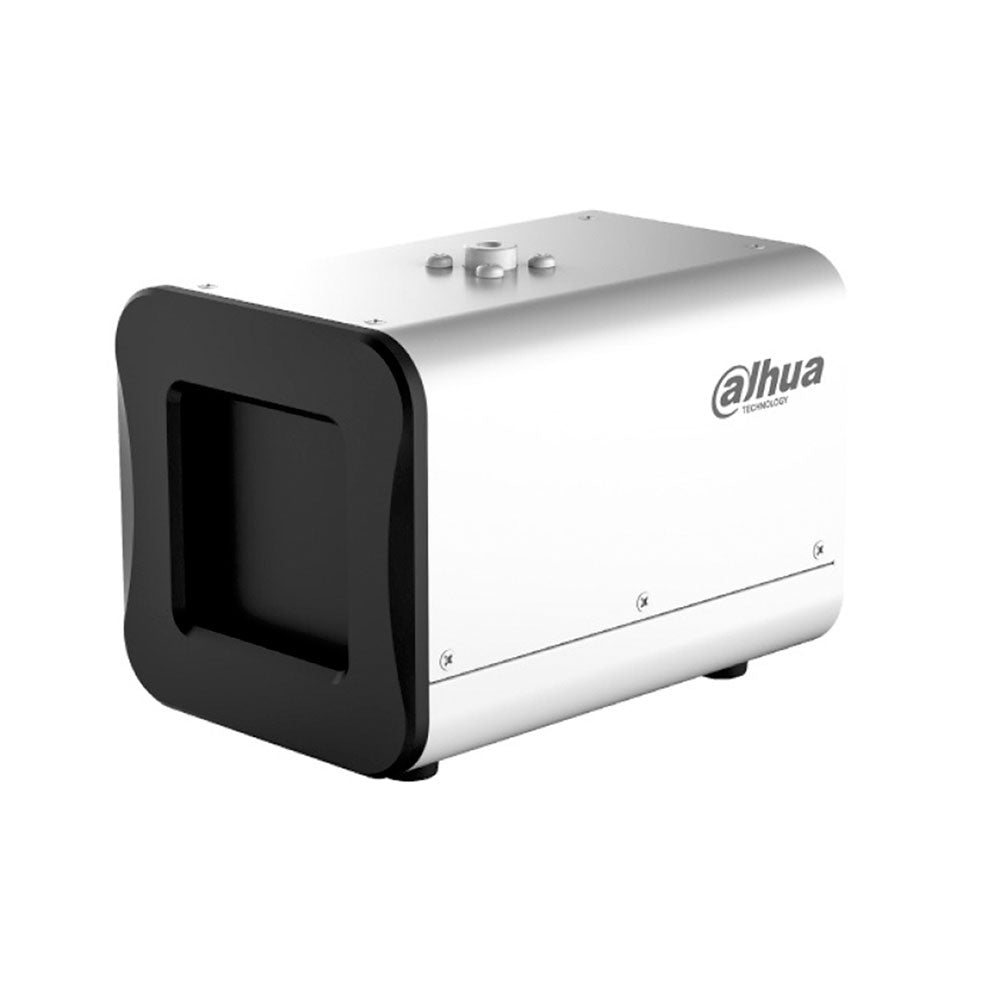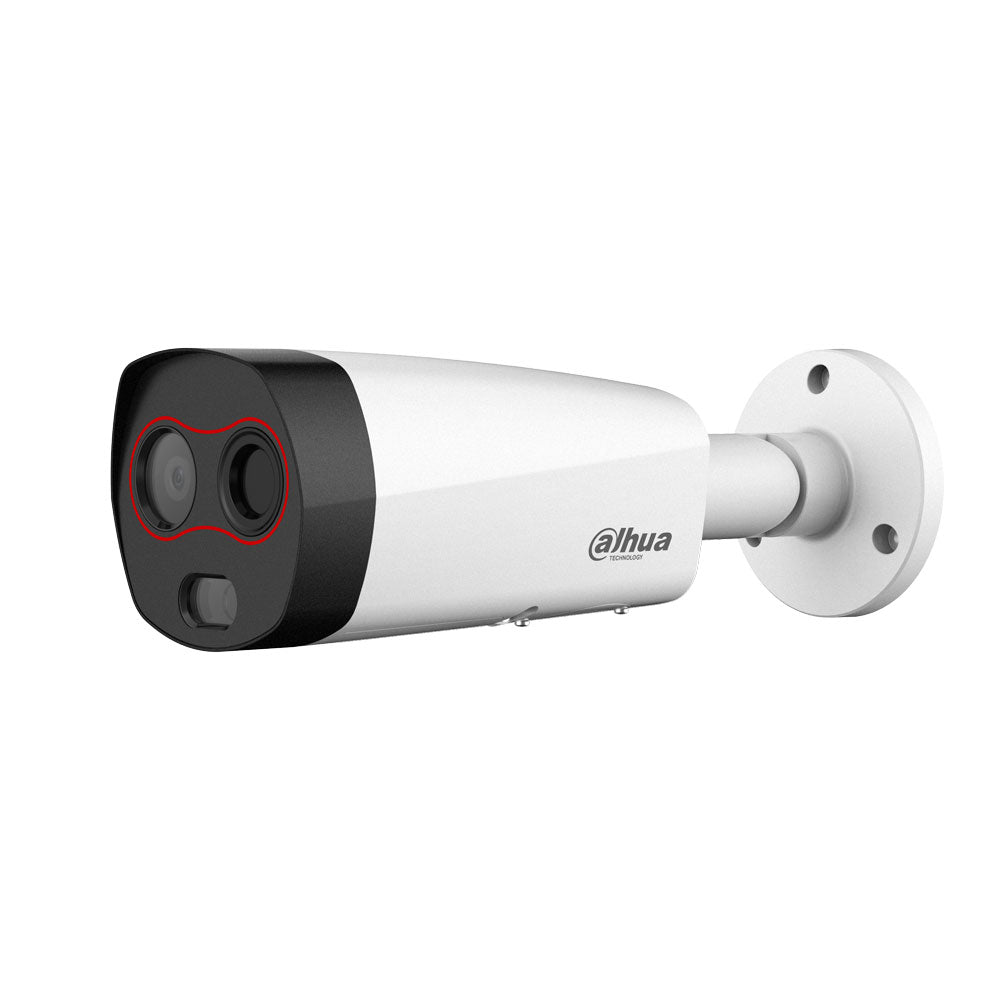
A thermal camera doesn't capture light but rather heat. Therefore, it can see in complete darkness, through smoke, fog, and rain — conditions where a conventional camera, even an infrared one, becomes blind.
Uses
Perimeter protection. On an industrial site, a depot, or an extended plot of land, thermal technology detects a human presence several hundred meters away, at night, without any lighting. This is its primary application.
Early fire detection. An abnormal hot spot is detected before any visible flames. On a storage facility for combustible materials, a technical room, or a waste disposal site, this changes the scale of damage.
Industrial process control. Temperature monitoring on equipment, production lines, or electrical cabinets.
What it doesn't do
A thermal camera cannot identify someone: it provides a thermal silhouette, not a face. It is therefore almost always coupled with a visible camera — bispectral models even integrate both sensors in a single housing, with the thermal camera triggering the alarm and the visible camera providing the evidence.
Sizing
The detection distance depends on the thermal sensor's resolution and the focal length. These installations are sized on a case-by-case basis: send us the site plan and the distance to be covered, and we will validate the model before ordering.