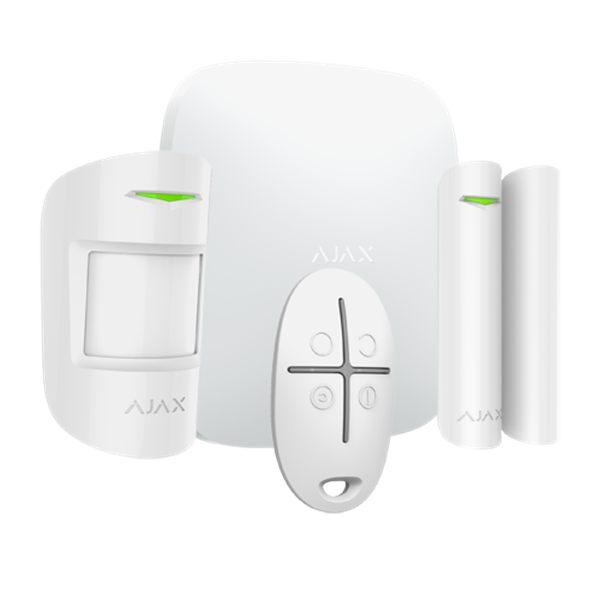
Dilbeek recorded 165 residential burglaries in 2025, its lowest level in the series. But the municipality also saw 212 burglaries in buildings, of which homes account for only 78%. The remainder targets business premises — and in a municipality where many self-employed people work from their private address, this statistical distinction often covers the same building.
The Dilbeek series, and the 2022 spike
The incidents recorded by the federal police trace a far from linear trajectory for Dilbeek. 268 residential burglaries in 2019, 216 in 2020, 217 in 2021, then a sharp rise to 277 in 2022 — above the pre-pandemic level. This 2022 peak is the municipality’s real turning point: only after it did the decline set in, with 210 incidents in 2023, 178 in 2024 and 165 in 2025.
Over the whole period, the fall reaches -38.4%, including -7.3% in the last year alone. In the long view, Dilbeek is well below its 2015 peak (394 incidents) and below its 2000 level (334 incidents). Per week, that is 3.2 incidents — a low rate, but its regularity is precisely the problem: it never produces the collective event that prompts a neighbourhood to react.
The municipality is residential in form: private plots, enclosed gardens, few overlooking neighbours, and a continuous fabric with the Brussels outskirts without their density. This form shifts the risk to the back of buildings, and it also shifts it to a place rarely talked about: the business annexe.
Dilbeek’s blind spot: self-employed work carried out at home
A paramedical practice in the rear extension, a workshop in the garage, a showroom fitted out in a former outbuilding, stock stored at home between deliveries, a tradesman’s van loaded with tools parked in the driveway: in Dilbeek, a large share of self-employed activity takes place on a residential plot. This situation combines two risk profiles that are kept separate elsewhere.
On the one hand, classic residential vulnerability: glazed rear access, veranda door, sliding patio door, an enclosed garden that shields the intruder once inside. On the other, the appeal of business premises: resaleable tools, IT equipment, stock, sometimes cash, and public opening hours that indicate exactly when nobody is there.
The practical consequence is clear. A system designed for a home protects at night and during holidays. A system designed for a business must also protect during the day, with the doors open — that is, while the business itself is operating, when the premises are accessible to people you do not know. These are two different zoning logics, which must coexist in the same building.
What this changes in practice for the equipment
Zoning is the first answer: a single control panel, but independent groups. The business premises can stay armed while the home is occupied, and conversely the home can be armed during the workshop’s opening hours. Without this separation, the system ends up disarmed all day ‘because otherwise it goes off’, which amounts to not having one.
Three additions are worth considering depending on the activity:
- A discreet panic button at reception or at the counter. It is not a gadget: it addresses a risk that does not exist in a private home, that of a confrontation with the professional present. See our panic and assistance buttons.
- Outdoor detection on the courtyard or car park side, to deal with the approach before the break-in rather than the broken glass afterwards. Outdoor detectors cover the driveway, the access to the annexe and the parking area.
- A camera on the loading area — delivery access, gate, parking area. For a courtyard that must be covered entirely without multiplying devices, a PTZ camera is justified; for a fixed axis and identification at a constant distance, a bullet camera and a PoE NVR recorder remain the most straightforward solution.
On the initial question — detect or film — our comparison alarm or camera explains the logic: the alarm interrupts, the camera documents. For a business, the two functions are rarely interchangeable. And if the building combines business premises and a home, going through our installation and services avoids the most common zoning mistake.
Municipal grant: what we can honestly say
We have not identified any home security grant specific to Dilbeek. Several Belgian municipalities offer one, generally calculated as a percentage of the invoice and capped at a few hundred euros. Two constants are worth knowing before hoping for anything.
First, these grants fund mechanical protection — reinforced cylinders and locks, burglar-resistant glazing, sturdy doors and frames — and not electronics. Alarm systems and cameras are almost systematically excluded. Second, they usually require a prior visit from the burglary prevention adviser, whose report is attached to the application. Enquire directly with the Dilbeek municipal administration: it is the only binding source, and the regulations change from one year to the next.
The diefstalpreventieadviseur: free, and particularly useful here
Dilbeek has its own police zone, the Lokale Politie Dilbeek (5406), and the municipality runs a burglary prevention advice service for houses and flats. The visit is free and the adviser has nothing to sell.
For a mixed-use building, this visit is particularly valuable: it looks at points no catalogue covers — the connecting door between the business premises and the home, whether the courtyard gate really closes, the strength of a sectional garage door, the protection of the annexe’s openings. Details of how to request a visit are on the burglary prevention advice page of the municipality of Dilbeek.
Legal obligations, identical in Flanders and elsewhere
One point to clarify, because the question often comes up among the self-employed: the rules below are federal. They do not vary between Flanders, Brussels and Wallonia, and they do not depend on the police zone.
Alarm: declaration within ten days via police-on-web, annual confirmation, outdoor siren limited to three minutes, annual maintenance, mandatory verification before police intervention — see our guide on the declaration of an alarm system.
Camera: declaration on declarationcamera.be, regulatory pictogram, record of processing activities, ban on filming the public highway or other people’s property. For a shop or premises open to the public, the people filmed must also be informed, and a camera monitoring workers falls under a separate framework, to be handled with your payroll and HR service provider. The general principle is detailed in our article on the camera law in Belgium.
Frequently asked questions
How many burglaries were recorded in Dilbeek in 2025?
165 residential burglaries were recorded in Dilbeek in 2025, an average of 3.2 per week. This is 7.3% fewer than in 2024 (178 incidents) and 38.4% fewer than in 2019 (268 incidents). Across all buildings, the municipality recorded a total of 212 burglaries in 2025.
Is there a municipal home security grant in Dilbeek?
We have not identified any municipal grant specific to Dilbeek. Some Belgian municipalities offer a grant for the mechanical protection of homes — locks, cylinders, burglar-resistant glazing, frames — but these grants almost always exclude alarms and cameras. The only way to be sure is to contact the municipal administration.
Does a self-employed person working from home need a different system?
Yes, on one specific point: zoning. The business premises and the home must be able to be armed separately, otherwise the system will be disarmed throughout the working day. A panic button and detection on service entrances also address a risk that does not exist in a purely private home.
Who can I contact for free burglary prevention advice in Dilbeek?
The municipality of Dilbeek runs a burglary prevention advice service for houses and flats, in conjunction with the Lokale Politie Dilbeek (5406). The visit is free of charge, has no commercial interest, and results in a written report on your actual building.
Can you film the pavement in front of your shop in Dilbeek?
No. A private surveillance camera may film neither the public highway nor a neighbour’s property: the field of view must stay limited to your own property and its immediate access points. The installation must also be declared on declarationcamera.be and indicated by the regulatory pictogram.
Sources: Police crime statistics, Federal Police DGR/DRI/BIPOL, publication 2025_T04 (closing date 24/04/2026) — Dilbeek municipal factsheet. No municipal home security grant had been identified for Dilbeek at the time of writing: check with the municipal administration.