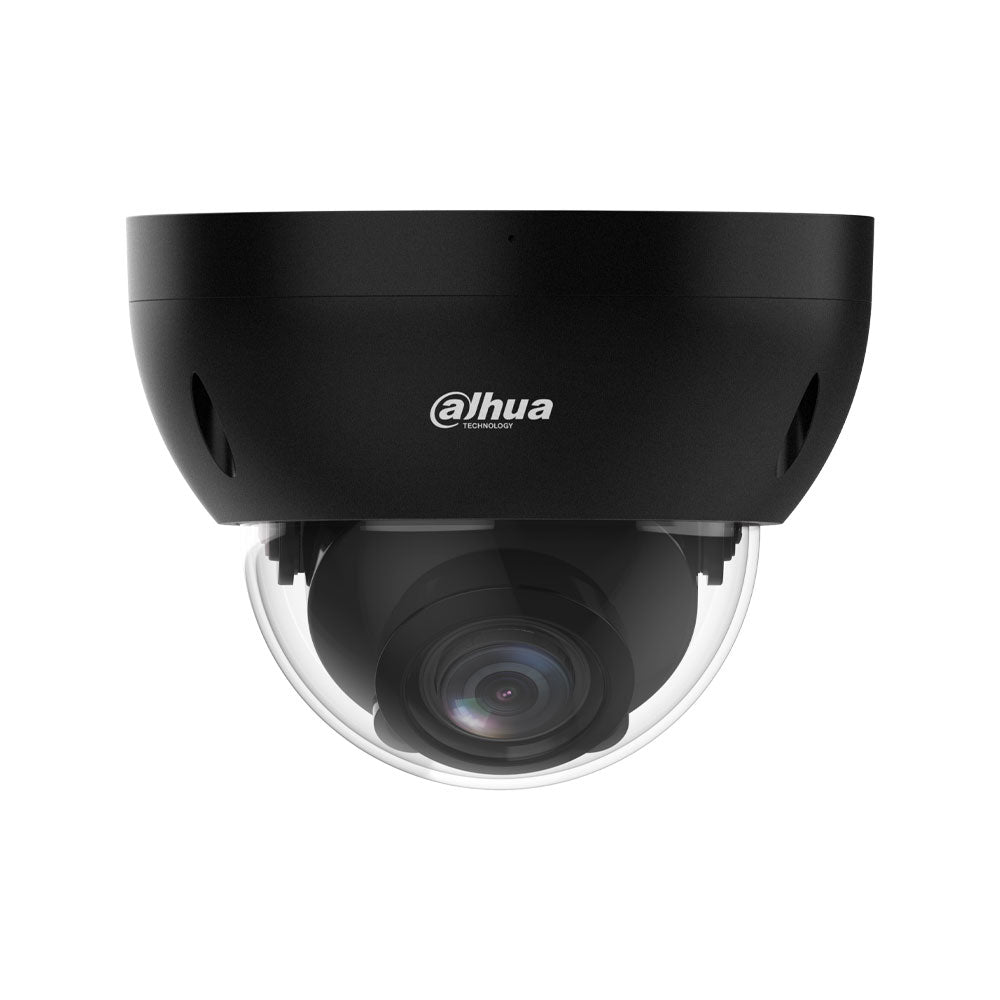
Camera declaration in Belgium: installing a camera is not unrestricted. The framework is based on the Act of 21 March 2007 regulating the installation and use of surveillance cameras, known as the 'camera law', substantially amended by the Act of 21 March 2018 which entered into force on 25 May 2018 — the same day as the GDPR, and that is no coincidence: the two texts apply together.
Here is what really concerns you, depending on whether you are a private individual or a professional.
1. Do you need to declare?
Private individuals: it all depends on what the camera films
The exemption from declaration is narrow: it only covers a camera that films the inside of your home, for personal and domestic purposes. A camera in your living room, to keep an eye on the house while you are away, does not have to be declared.
On the other hand, a camera that films the entrance to your home, your driveway or your garden must be declared, even for a private individual. These spaces are 'enclosed places not accessible to the public' within the meaning of the law: declaration, pictogram and register of processing activities apply.
And even for an indoor camera exempt from declaration, the principles of proportionality and respect for privacy continue to apply in full — towards a cleaner or a babysitter, for example.
Professionals: declaration is mandatory
As soon as the camera is installed by a company, an association, a co-ownership, a shop or a public administration, the exemption no longer applies. Declaration is mandatory.
2. Where the lens must point
This is the point on which neighbour disputes are settled, and the rule is clear. A camera may not be aimed specifically at a place for which the data controller is not itself competent.
In practical terms for a private individual:
- Your land, your façade, your driveway: permitted, with declaration.
- The neighbour's garden or windows: prohibited.
- The public road, the pavement in front of your house: prohibited. Only a small portion of pavement may appear incidentally in the field of view of a camera monitoring your entrance, provided it is kept to the strict minimum.
If in doubt, point downwards and use the privacy masks offered by most IP cameras to blank out the prohibited areas.
3. The declaration: how to do it
| Item | Detail |
|---|---|
| Where | www.declarationcamera.be |
| Cost | Free |
| Identification | Electronic identity card, citizen token or mobile app |
| Recipient | Police services (no longer the Data Protection Authority since 2018) |
| Updating | Annual validation of the declaration |
| Support | Helpdesk 02/739 42 80, Monday to Friday from 9 am to 5 pm |
The declaration must remain accurate: any change of controller, address or configuration must be reflected in it.
4. The pictogram
Any covert use of cameras is prohibited. Signage with a compliant pictogram is therefore mandatory, and it is what makes the processing lawful with regard to the people being filmed.
Three formats are provided for depending on the location: 0.60 × 0.40 m, A4 format, or 0.15 × 0.10 m. The pictogram must state the contact details needed to exercise one's rights — name of the data controller and how to contact them. The official template can be downloaded free of charge from the FPS Home Affairs website (besafe.be).
A missing or incomplete pictogram is the most frequently found irregularity, and the easiest to avoid.
5. The register of processing activities
This is the most frequently overlooked obligation, because it comes from the GDPR and not from the camera law. Anyone operating a camera system subject to declaration must keep a register of their image processing activities, on paper or in electronic form, and produce it at the request of the supervisory authority.
The register contains at least:
- the name and contact details of the data controller;
- the precise purposes of the processing (not 'security', but 'prevention of theft from the stockroom');
- the categories of recipients of the images;
- the security measures in place;
- the retention period applied.
A one-page table is enough. Its absence, on the other hand, is a non-compliance in itself.
6. How long to keep the images
The general rule: one month maximum. Beyond that, the images must be deleted.
Two exceptions:
- images that may help to prove an offence, damage or identify a perpetrator may be kept for as long as necessary;
- certain places of particular risk (airports, military sites, nuclear installations) benefit from a period extended to three months.
This one-month limit has a very practical consequence for sizing: there is no point in oversizing storage. A suitable hard drive for thirty days of recording is enough, and beyond that you are storing what the law requires you to delete. Our article on choosing an NVR explains the calculation.
7. Who can view the images
Access to the images is restricted to the data controller and the persons they have authorised. The images must be made available to the police services on request in the context of an investigation. They may not, however, be made public — posting the video of a theft on social media is an offence, even if you are the victim.
8. Deadline: when to make the declaration?
The declaration must be made at the latest the day before the system is put into service. In practice, do it as soon as the installer confirms the installation date: the online form takes about fifteen minutes, and you will be asked for the number of cameras, their location (open place, enclosed place accessible or not to the public), the purpose and the retention period. Any later change — camera added, change of operator, move — is reported in the same portal, and the declaration must be revalidated every year.
9. Penalties for non-compliance
The camera law provides for criminal fines for failure to declare, missing pictogram, unlawful orientation or covert use; the GDPR adds the administrative penalties of the Data Protection Authority. Images obtained in breach of the rules may also be excluded as evidence. A compliant declaration is also what most insurers require to compensate a loss on the basis of recordings.
10. Frequently asked questions
Does a video doorbell need to be declared?
Yes: it films the entrance to your home, which makes it a camera to be declared, with a pictogram, even for a private individual. Adjust its field of view so that it is limited to your doorstep and extends as little as possible onto the pavement.
Is a dummy camera subject to the law?
No, it processes no images. But it provides no evidence either.
Does a co-ownership have to declare the cameras in the entrance hall?
Yes: the association of co-owners is not a natural person, so the domestic exemption does not apply. Declaration, pictogram and register are mandatory.
Can I film my employees?
Yes, within the framework of Collective Labour Agreement (CCT) No. 68: prior information of staff, legitimate purpose (security, protection of property) and proportionality. Never in changing rooms or toilets.
Who can install my cameras?
You yourself or an installer. For a professional installation in Brussels and the surrounding area with declaration included, contact our partner Belgium Security.
In summary
| Private individual — indoor camera | Private individual — entrance, driveway, garden | Professional | |
|---|---|---|---|
| Declaration on declarationcamera.be | Not required | Mandatory, validated every year | Mandatory, validated every year |
| Pictogram | Not required | Mandatory | Mandatory |
| Processing register | Not required | Mandatory | Mandatory |
| Orientation limited to your property | Yes | Yes | Yes |
| Maximum retention | 1 month | 1 month | 1 month (3 months for high-risk places) |
Further reading
Choosing your surveillance camera · IP cameras · NVR recorders · Storage · Declaring your alarm system
This article summarises the applicable framework and does not constitute legal advice. For a specific situation — co-ownership, shop with car park, camera overlooking a road —, contact your police zone or the Camera helpdesk (02/739 42 80).