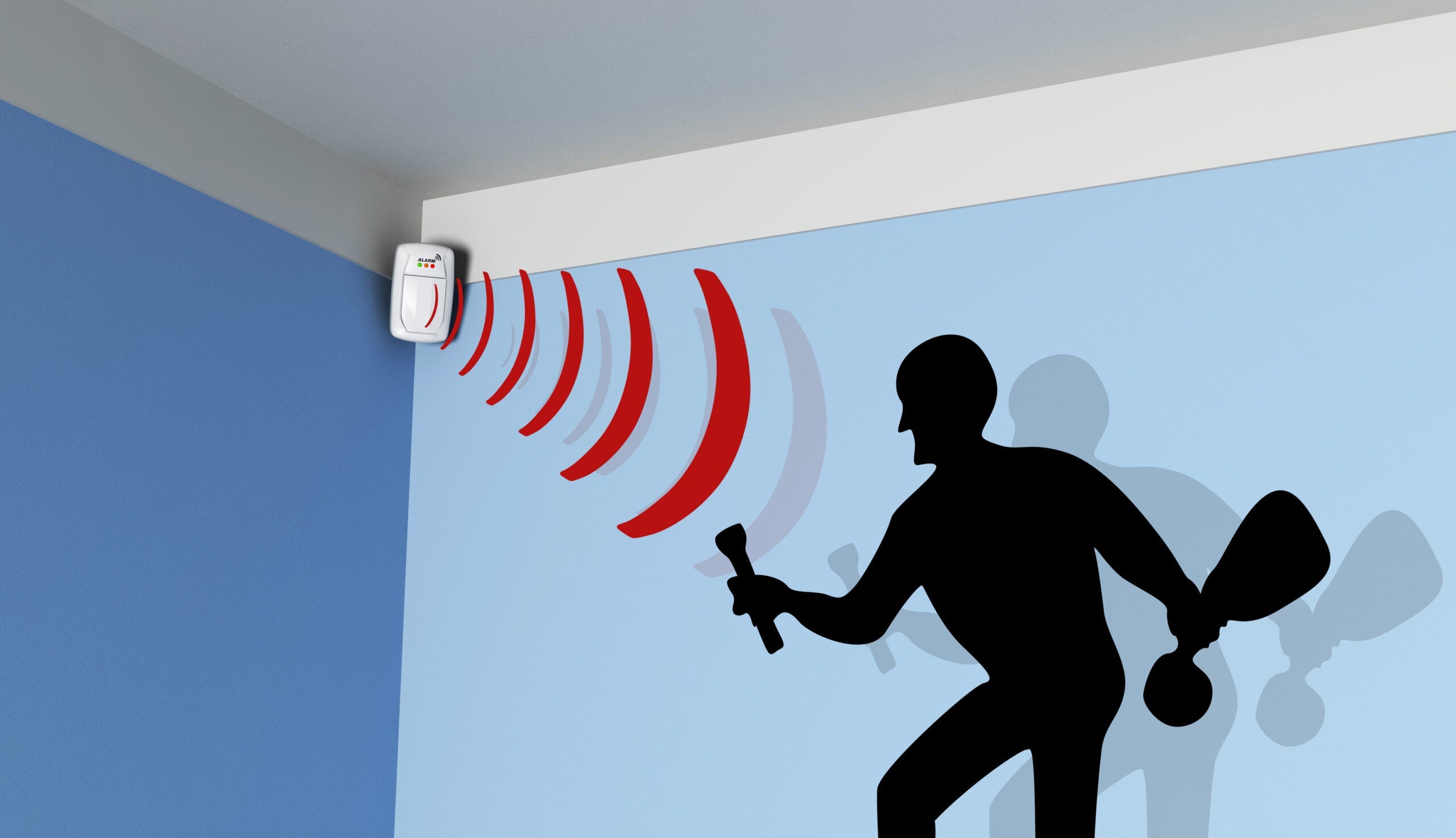
Home Alarm: How to Truly Protect Your Home
A burglary never gives warning. We all know this in theory, but we usually only think about it after the fact – a forced window at the neighbour's, an article in the local press, or worse, an unpleasant surprise on returning from holiday. That's why more and more people are taking the plunge before something happens, rather than after.
We regularly receive similar questions at SecuriShop: which alarm to choose, how much does it really cost, do you need a subscription, is it complicated to install yourself? This guide covers the answers we give most often, to help you see more clearly before buying.
Why an Alarm Truly Makes a Difference
The first thing often overlooked is that an alarm is not just a tool to react during a burglary; it's above all a tool to prevent it. Most burglars are not professionals who study a house for weeks. In the vast majority of cases, they are opportunists who move on as soon as they spot a siren, a sticker or a clearly visible camera on the facade. Simply showing that the home is protected already does a good part of the job.
There's also everything you don't see at first glance: being able to check from your phone that everything is fine while on holiday, receiving a notification if someone forces a door while you're asleep, or simply sleeping soundly at the weekend. And the icing on the cake: several insurers offer a discount on home insurance premiums when the home is equipped with a certified system, especially if it's connected to an approved monitoring service. It's worth checking directly with your insurer, as conditions vary quite a bit from one company to another.
The Main Categories of Alarm Systems
Before comparing specific models, you first need to know which category to look into. There are broadly four approaches, and honestly, no single one is always better than the others – it all depends on your home.
Wired Alarm
This is the long-term safe bet: no batteries to change, no risk of radio jamming. On the other hand, installation requires running cables through the walls, which mainly limits it to new builds or major renovations where the walls are already open.
Wireless Alarm
This is currently the most popular option for an existing home, simply because nothing needs to be altered: the detectors communicate with the control panel via radio waves. Serious models use strong encryption and anti-jamming protection to prevent a reasonably well-equipped burglar from cutting the signal before acting. The only maintenance required is replacing the batteries from time to time.
GSM and Connected Alarm
These systems send alerts directly to your phone via the mobile network, meaning they keep working even if someone cuts off your internet router before entering. This has become almost standard today, and we clearly recommend a control panel with dual connectivity (IP and 4G) for this very reason.
Hybrid Alarm
A mix of the first two approaches: wiring in technical areas such as the garage or cellar, wireless detectors in the living areas. This is often what installers suggest when a house is a bit older and you want the best of both worlds without redoing everything.
What Really Makes a Difference When Choosing
Once you have an idea of the type of system, several technical details deserve checking before you buy, because this is often where the difference lies between a reliable system and one that disappoints after six months.
The EN 50131 standard classifies professional systems into four grades. For a typical private home, grade 2 is more than sufficient; grade 3 is more justified for a property with a higher risk. The backup battery is another point not to overlook: in the event of a power cut, the control panel must keep working for several hours, not just a few minutes. Also check that the mobile app really lets you arm, disarm and view the history in real time – some entry-level apps are more limited than they appear on the product sheet. Finally, if you plan to add cameras one day, it's worth checking now that the system can connect to them, rather than having to change everything later.
With or Without Remote Monitoring?
An alarm can work perfectly well on its own: it alerts you and your loved ones, and that's it. It can also be connected to a monitoring centre that takes over 24/7 and can, depending on the contract, send someone to the site.
One point to be aware of if you opt for the latter: in Belgium, any installation connected to a monitoring centre, or exceeding certain thresholds, must comply with the approval requirements of the FPS Home Affairs. If you use a reputable professional installer, they will normally handle this for you, but it's worth asking before you sign. For most households, a connected alarm with smartphone notifications and no mandatory subscription already covers the need very well.
How Much Does It Actually Cost?
This is often the first question we are asked, and the honest answer is: it depends enormously on the level of equipment. To give you an idea:
Expect to pay from around €70 for an entry-level kit with a control panel and one or two detectors. Between €150 and €500, you enter the mid-range, with a complete system covering a standard house: several detectors, a siren and a decent mobile app. Above €1,000, we are talking about a professional installation with integrated remote monitoring and video surveillance, usually grade 3.
A small tip we often give Walloon customers: some municipalities offer local grants that can cover 10 to 30% of the cost of installing an anti-burglary system. It's really worth checking with your municipality before buying, rather than after.
The Most Common Mistakes We See
Even the best system in the world loses much of its value if it is poorly installed or misused day to day. The most frequent pitfalls we see among our customers: focusing only on the front door while forgetting the garage, the bathroom window or the skylight; placing a motion detector directly opposite a radiator or a south-facing bay window, which multiplies false alarms; never testing the alarm after changing the batteries; forgetting to explain how the system works to other family members, which always ends up triggering a false alarm at the worst possible moment; and installing the control keypad in plain sight right next to the door, which makes it far too easy to neutralise during a quick break-in.
Our Most Frequently Asked Questions
Is a wireless alarm really reliable?
Yes, provided you opt for a professional system with encryption and anti-jamming. For most existing houses, this is also the option we recommend first, simply because it avoids building work.
Is a subscription absolutely necessary?
No. Most consumer connected alarms work very well without a subscription: alerts arrive directly on your phone. A subscription only makes sense if you want genuine remote monitoring with a possible on-site response.
Does it lower my insurance premium?
It depends on the insurer. The only way to know for sure is to ask them directly, specifying whether or not your system is connected to an approved monitoring service.
How long does installation take?
For a typical residential wireless system, allow one to three hours, with no major drilling work.
Where should the alarm control panel be placed?
In a discreet location, out of sight from outside, and certainly not right next to the front door – that's the first place a burglar will look during a quick break-in.
In Conclusion
Securing your home no longer requires a huge budget or endless work. Today's wireless systems can be installed in a few hours and controlled entirely from a phone. The real task is mainly taking the time to choose a system suited to the size of your home and the peace of mind you are looking for – not necessarily the most expensive, but the right one for your situation.
Want a clearer idea of what would suit your home? Take a look at SecuriShop: our team will be happy to advise you on the system that truly matches your home.